
The Netherlands forms a new government, what the coalition’s priorities mean in practice
After months of political negotiations following the October 2025 election, the Netherlands has finally established a new government. What emerged is a rare minority coalition government, bringing together Democrats 66 (D66), the People’s Party for Freedom and Democracy (VVD) and the Christian Democratic Appeal (CDA). Unlike a traditional majority coalition, this alliance holds only 66 out of 150 seats in the House of Representatives, meaning it must secure support from other parties on a case-by-case basis to pass legislation.
The new cabinet is led by Rob Jetten (D66) as prime minister, and it marks a notable shift in Dutch politics, not just in composition, but in policy emphasis and governing style. This government reflects a blend of centre liberal, centre right and Christian democratic views, united around a pragmatic response to both domestic challenges and a more uncertain global environment.
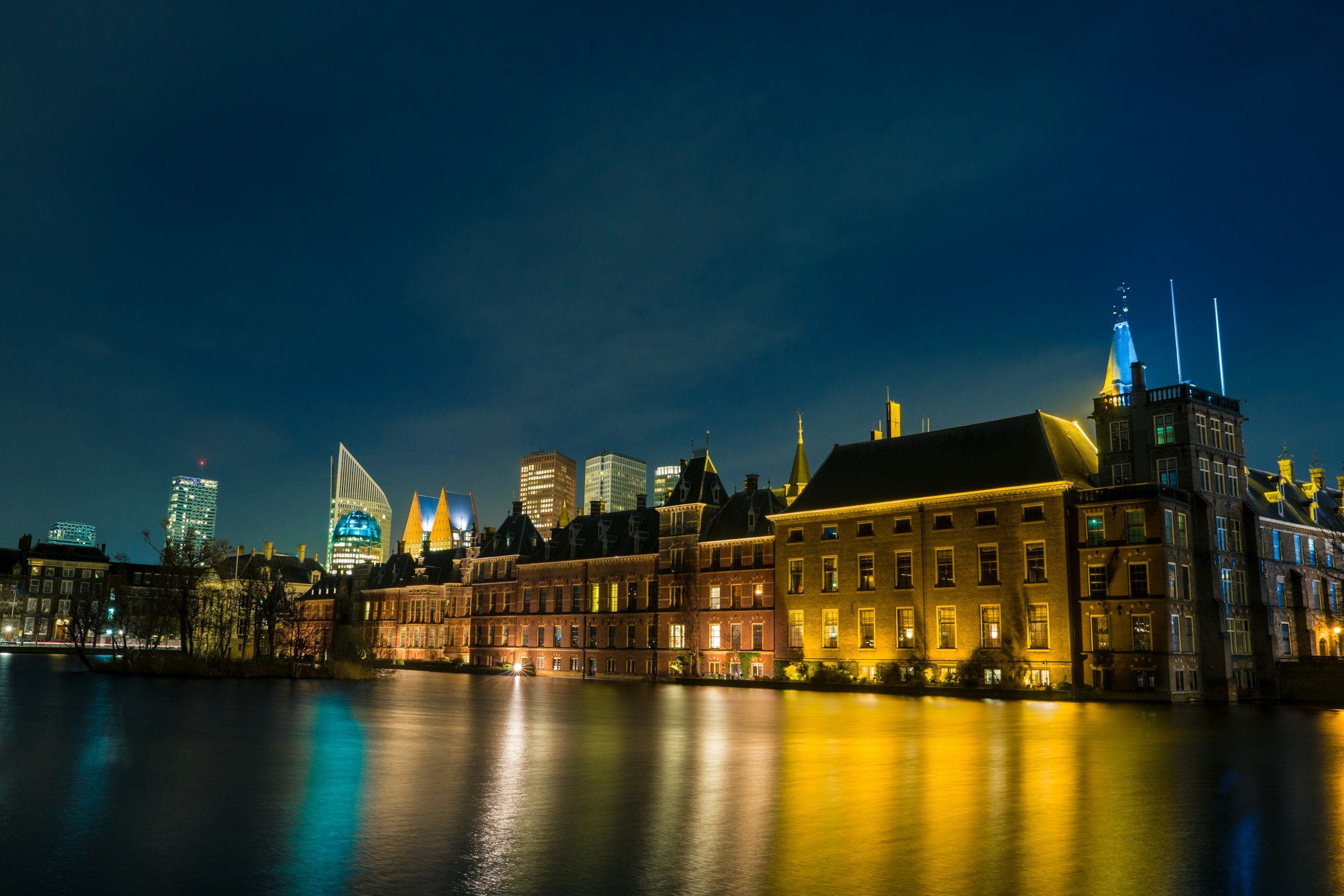
Seat of the Dutch Government in The Hague
A government of negotiation not routine
A minority cabinet in the Netherlands is uncommon. Coalitions that lack a parliamentary majority require negotiation not only within the cabinet but with other parties in every major policy area. The immediate implication is that each legislative proposal must be politically sellable beyond the coalition’s own ranks. Legislation that is tightly fought over or highly ideological may struggle to secure the support it needs.
This dynamic creates both constraints and opportunities:
Constraint on bold unilateral action, because hard edged proposals risk defeat on the floor of the House of Representatives.
Opportunity for consensus building, as success becomes dependent on cross party negotiation.
Greater role for parliament, because support from beyond the coalition will be essential for most initiatives.
The coalition agreement, negotiated over many weeks, therefore reads less like a rigid manifesto and more like a set of negotiated platforms that can be adapted in dialogue with other parties on specific policy files.
Defence and national security redefined as central concerns
The centrepiece of the government’s agenda is a substantial strengthening of national defence and security policy. The cabinet has set out a trajectory to raise Dutch defence spending towards 3.5 per cent of GDP by 2035, aligning with evolving expectations within NATO for burden sharing. This involves increased investment in personnel, equipment and strategic capabilities, and a funding model built around a proposed new surcharge on income and corporate taxes dubbed the “freedom contribution”.
This marks two clear shifts in the Dutch policy stance:
Defence and national security are elevated from peripheral concerns to a central pillar of national strategy.
Funding for these priorities is explicitly tied to new revenue streams rather than purely reallocation, reflecting a willingness to modify the tax base in service of strategic aims.
Support for Ukraine is also embedded as a multi year commitment, stabilising a key element of European policy continuity.
Fiscal discipline remains a stated goal, with government documents emphasising a balanced approach to deficit management even as defence outlays rise. This balance will be a key test of the minority government’s capacity to deliver on its promises without losing control of the budget narrative.
An economic agenda framed around competitiveness
While the defence agenda has garnered the most attention, the coalition’s economic programme is consequential. It seeks to address structural challenges in the Dutch economy by focusing on competitiveness, investment and the cost environment for industry.
Key elements include:
Reducing regulatory burdens on business, particularly in sectors critical to future growth.
Lowering energy costs for manufacturers while investing in greener energy production, situating decarbonisation as industrial strategy, not solely environmental policy.
Reversing previous cuts to science, education and innovation budgets, with the aim of lifting productive capacity and securing long term GDP growth.
This approach reflects an understanding that Europe’s open economy must contend with international competition, particularly from the United States and Asia, and that targeted public support can unlock investment and improve productivity without unduly crowding out private sector initiative.
Housing policy emphasises supply and access
Housing remains a pressing domestic issue, and the coalition has placed it high on its agenda. Plans include:
Mandatory quotas for social and affordable housing in new developments.
Measures to facilitate the creation of more housing units, including policies to make better use of existing stock.
Tighter eligibility checks for social housing, including income and assets tests.
The emphasis is on expanding supply while also ensuring that subsidised housing is targeted at those most in need. In a minority governance context, housing is one of the policy areas where cross party consensus has been—and can be—more readily found.
Climate, environment and nitrogen policy
The coalition agreement tackles climate and environmental issues with an approach tailored to distinctive Dutch priorities. The nitrogen pollution problem, which has affected infrastructure and housing development for years, receives dedicated funding and enforcement mechanisms. Farmers are offered both support and regulatory pressure to reduce emissions, and tax exemptions such as “red diesel” are being phased out.
The broader emphasis is on a managed transition that aligns environmental responsibility with economic practicality. Energy affordability remains a priority, particularly for industry, and subsidies for clean energy production are positioned as a means to support competitiveness.
Migration and integration with dual focus
The agreement continues several policies of the previous government regarding asylum and migration control. However it also embeds more moderate measures, including support for language and work pathways for people likely to gain residency status. The result is a dual focus: maintaining strong procedural control while facilitating integration where possible.
Changes to healthcare and welfare settings
Healthcare and welfare reform form part of the coalition’s plan to contain costs and improve efficiency. Proposed changes include adjustments to insurance excesses and eligibility for some benefits based on individual capacity to pay. Certain services may no longer be publicly funded for people with sufficient assets, and changes to unemployment benefit duration and coverage are signalled.
Given the political sensitivity of welfare reform, these measures are among the most difficult for a minority cabinet to advance, and may involve significant negotiation with other parties to achieve passage.
Foreign policy reorientation
On foreign affairs, the government has signalled a desire to be more constructive within the European Union, reversing some of the more sceptical stances of the previous government while stopping short of endorsing deeper fiscal integration at the EU level. The coalition also proposes a modest expansion of Dutch diplomatic presence and support for development aid.
This offers stability for international partners and communicates that the Netherlands seeks to be an active participant in shaping European policy, not simply a respondent to it.
What this means for Netherlands–Australia trade
Although there are no immediate changes to trade policy anticipated, the coalition’s priorities offer signals that could shape the environment for bilateral economic engagement:
The emphasis on competitiveness, energy affordability and industrial innovation aligns with sectors where the Netherlands and Australia have common interests, especially in clean energy technology, sustainable manufacturing and supply chain resilience.
A heightened focus on defence and security investment may open avenues for cooperation in areas such as cyber security, dual use technologies and critical infrastructure.
Continued investment in education and science creates opportunities for research collaboration and talent exchange that underpin long term economic ties.
In practical terms, Australian businesses and investors should watch where Dutch public investment and regulation converge with global opportunities, as this will shape areas of mutual interest and commercial collaboration in the years ahead.
