
Grown in Delft, buried in the Blue Mountains
There is a company in Delft that grows coffins out of mushrooms. Loop Biotech has been doing it since 2020, and earlier this month it made its first sale in Australia, with a burial at Springwood Cemetery in the Blue Mountains.
The product is called the Living Cocoon. It is made from mycelium, the root network that sits underneath mushrooms, held together with hemp fibre left over from farming. The mix is packed around a mould and left in a warm, humid room, and the fungus fills out the shape over about a week. What comes out weighs 30 kilograms, carries up to 200, has six jute handles and a bed of moss inside. Once it is in the ground it disappears into the soil in roughly 45 days, where a varnished timber coffin with metal fittings can sit there for decades.
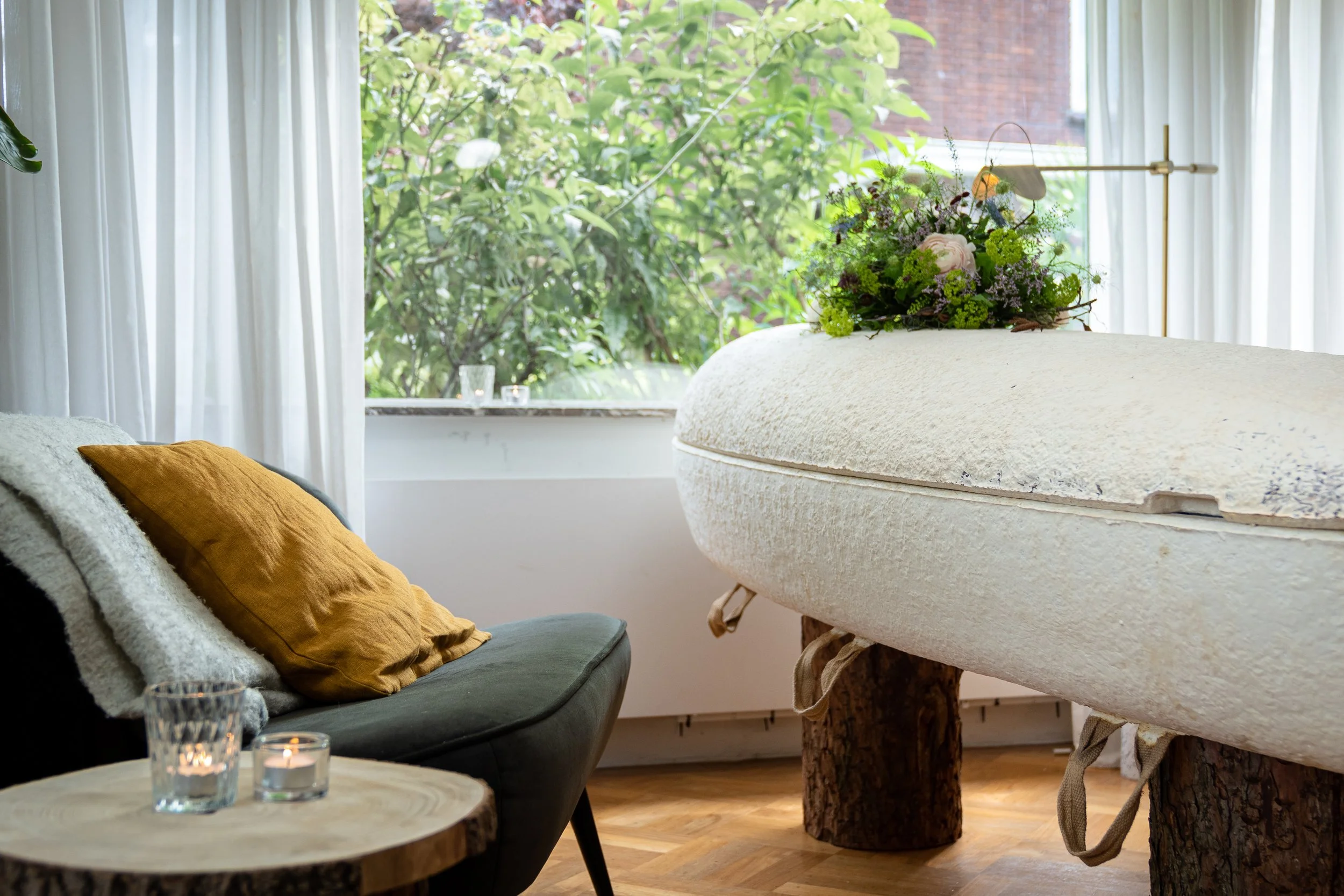
Loop Living Cocoon™ - ©Loop Biotech
It started as a student project
Bob Hendrikx is 32, trained as an architect at Delft University of Technology, and started messing about with mycelium as a building material while he was still there. The coffin came out of that. Loop now also makes a funeral carrier, an urn, and smaller versions for infants and for pets.
The company grew everything in Delft and sold into the Netherlands first. The UK opened up properly in early 2025 through a handful of independent funeral directors, the first American burial followed later that year, and Australia is now somewhere around the fifteenth country to take the product. Loop raised money through the Dutch version of Dragons' Den and later through a public crowdfunding round, which is not a route many funeral businesses would find open to them.
Australia was slow for the reason you would expect
Hendrikx has said Australians were enquiring from early on, and that biosecurity was what held things up. This is a living organic material and Australia is famously difficult about anything that grows, so the company had to clear that before it could appoint anyone to sell here.
When it finally got through, Loop signed a local partner rather than setting up its own operation. Reports name Arrow Bronze, a memorialisation business that already deals with Australian funeral directors. Nothing is manufactured here. The coffins are still grown in Delft and shipped out, which for a company this size is a reasonable way to reach a market at the other end of the world without paying to be in it.
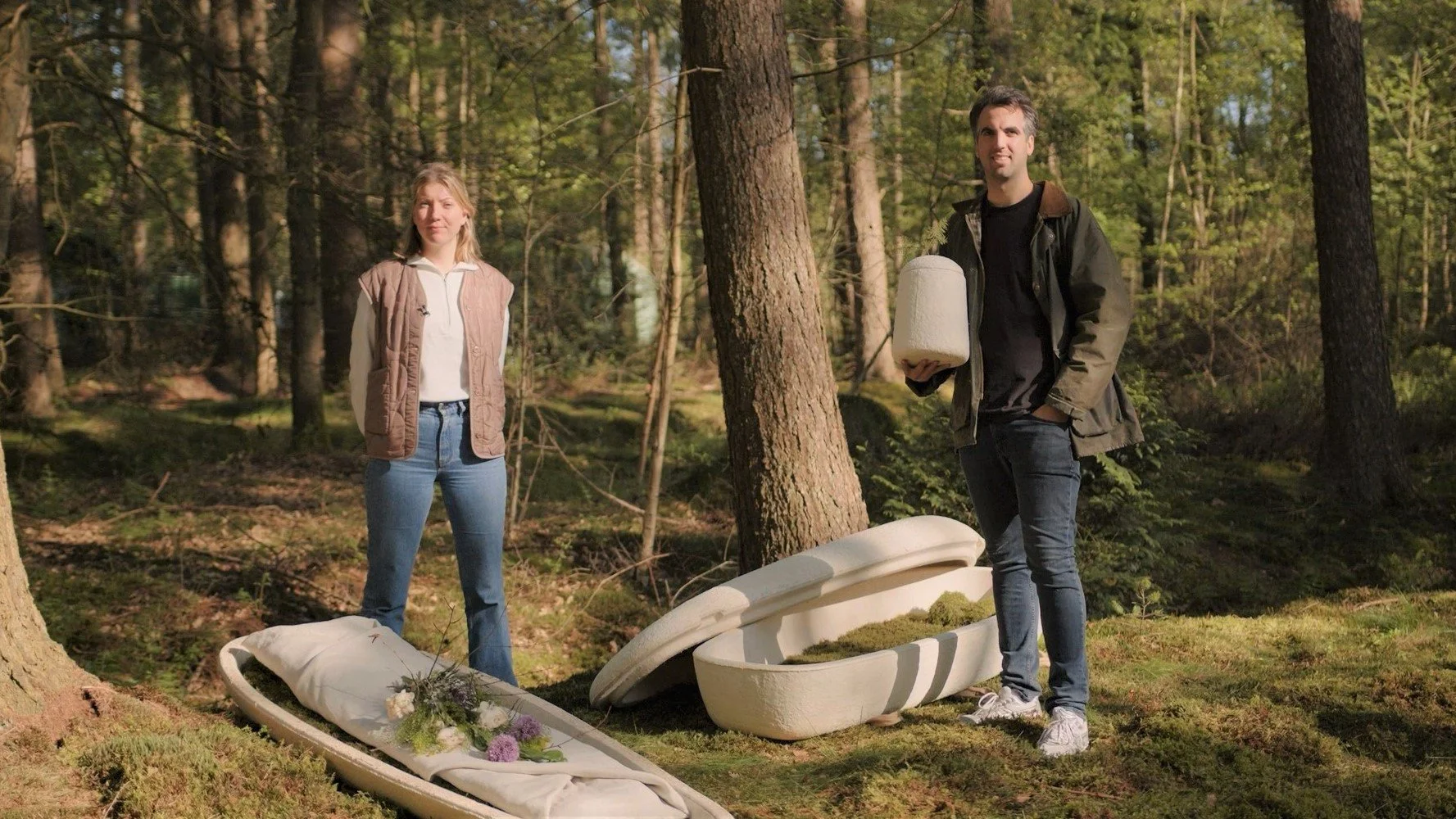
Bob Hendrikx and Lonneke Westhoff - ©Loop Biotech
Funeral directors say the questions have changed
Asha Dooley, who runs Grace Funerals and is national president of Funerals Australia, handled the Blue Mountains burial. She has been in the industry fifteen years and says families almost never raised sustainability until about four or five years ago. Now it comes up constantly. Her view of the coffin was that it is one of the more genuinely new things she has seen turn up, because it is grown rather than made.
The law is some way behind. Independent NSW MP Alex Greenwich put a bill to parliament in June that would allow human composting in the state, where a body is broken down alongside wood chips and straw over several weeks into material that can be used for soil regeneration or memorial planting. It has not passed.
The numbers are modest too. Australians still choose cremation over burial by roughly seven to three, largely because cemetery land around Sydney and Melbourne is expensive, so a mycelium coffin certified for both is entering a market that has not grown very large yet.
How Dutch products get here
Take away the mushrooms and this looks like a lot of Dutch products that end up in Australia. It was proven at home in a market that pays for circular design, held up here by biosecurity rather than by any lack of demand, and then sold through a local partner who already had the customer relationships. Several Dutch companies in circular materials and regenerative design are working through the same sequence right now, mostly with less arresting products.
Reporting drawn from Startup Daily, SmartCompany, The Age and Loop Biotech.
