
Event Recap: Plan, Offend or Get It Done: A King's Day Conversation
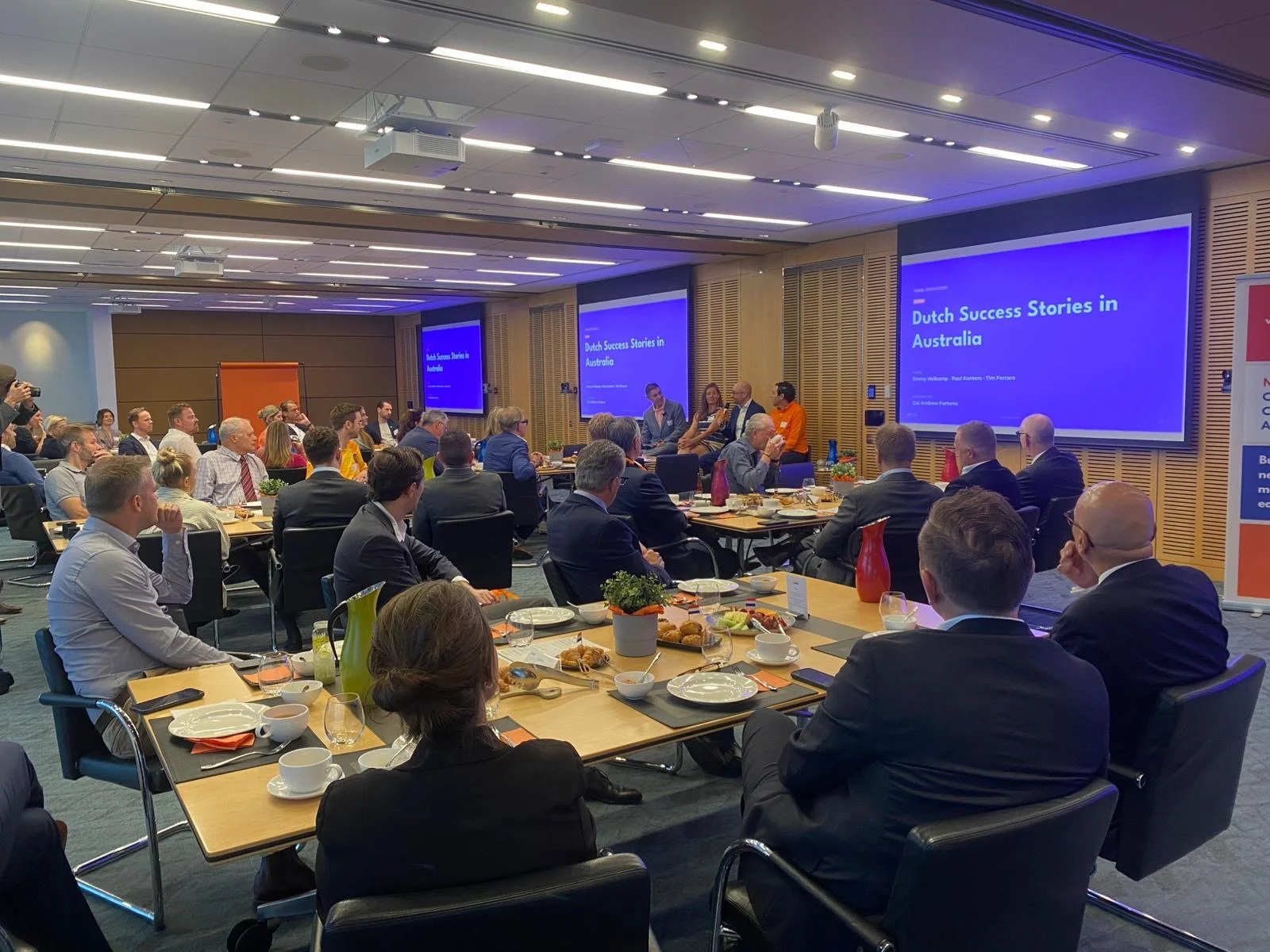
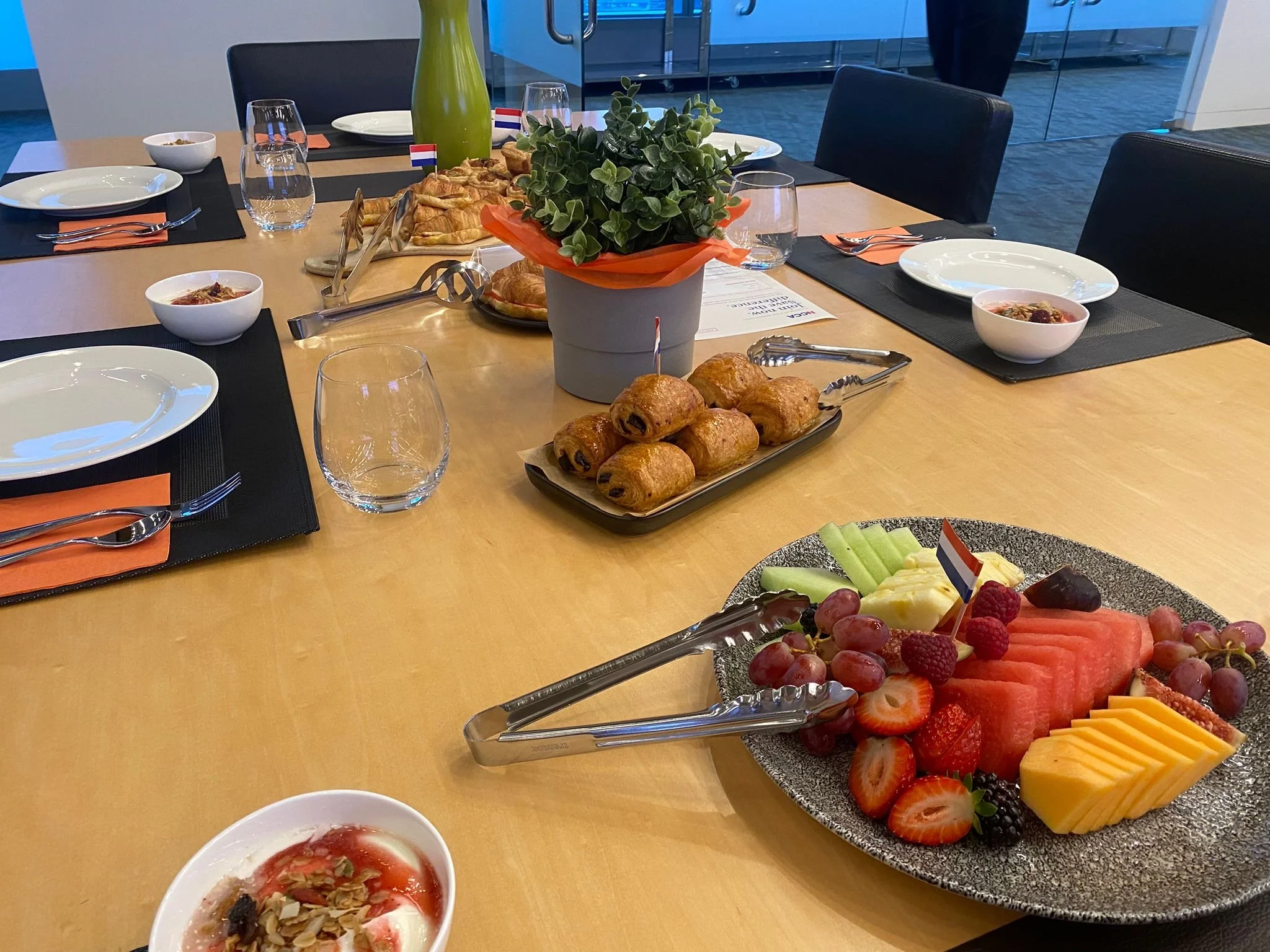
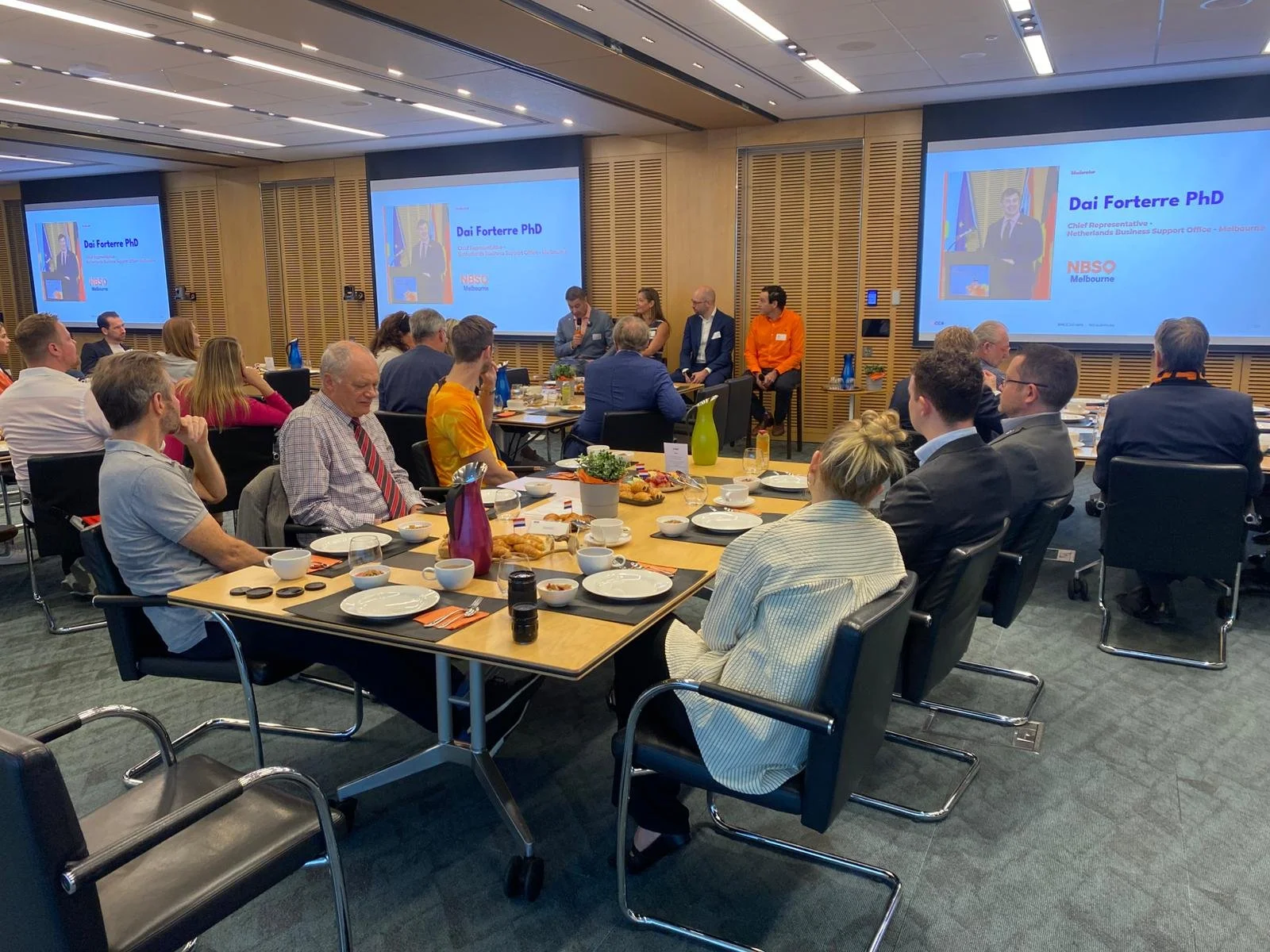
Our King's Day Business Breakfast at KPMG put three very different Dutch-Australian business journeys side by side. The contrast was the point.
There is a useful corrective in hearing how Dutch businesses actually arrive in Australia, rather than how the case studies imply they do. At the NCCA's King's Day Business Breakfast at KPMG Melbourne on Monday 27 April, three speakers offered three completely different origin stories, and almost every assumption about strategy, scale and serendipity got tested in the process.
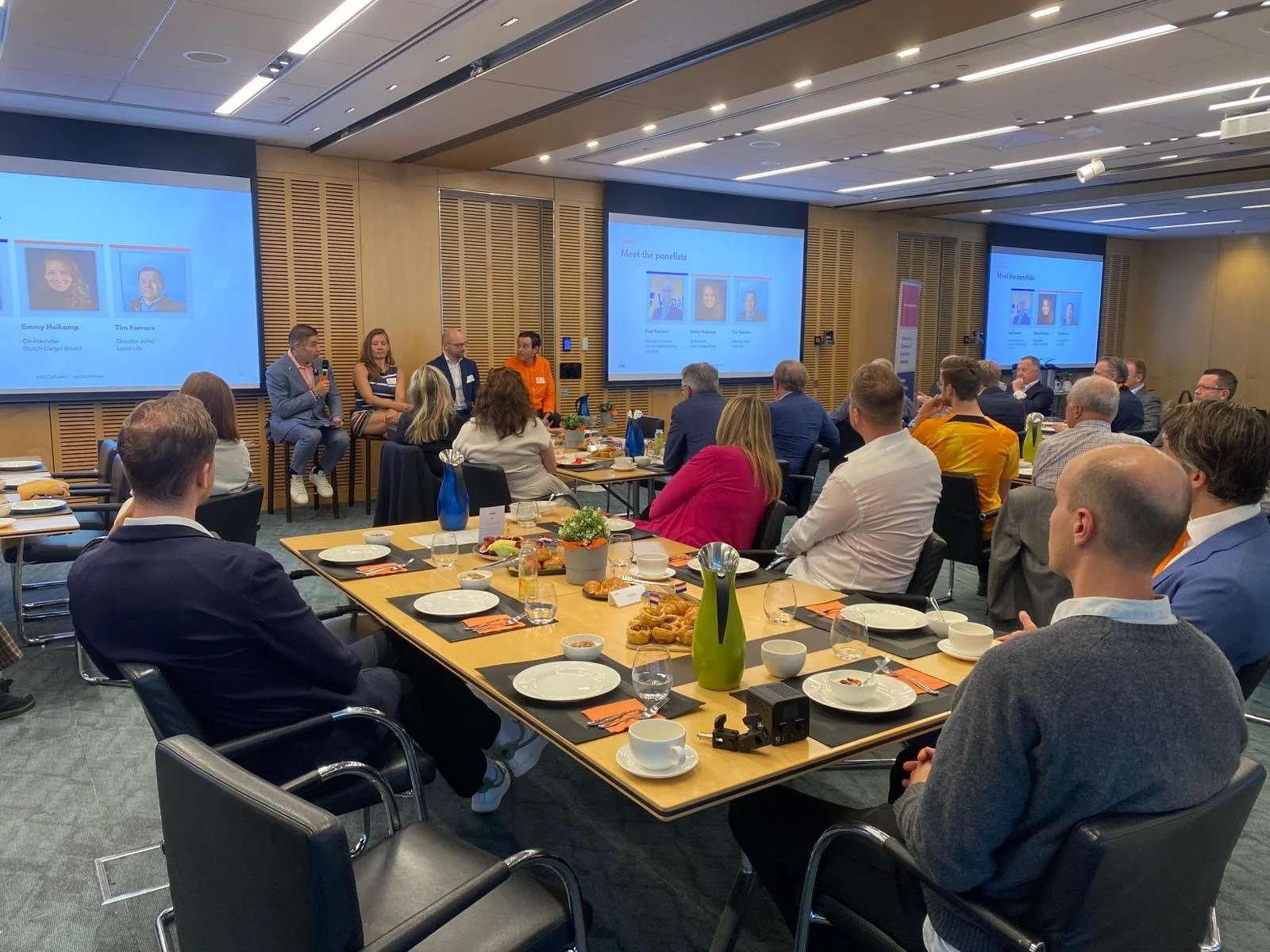
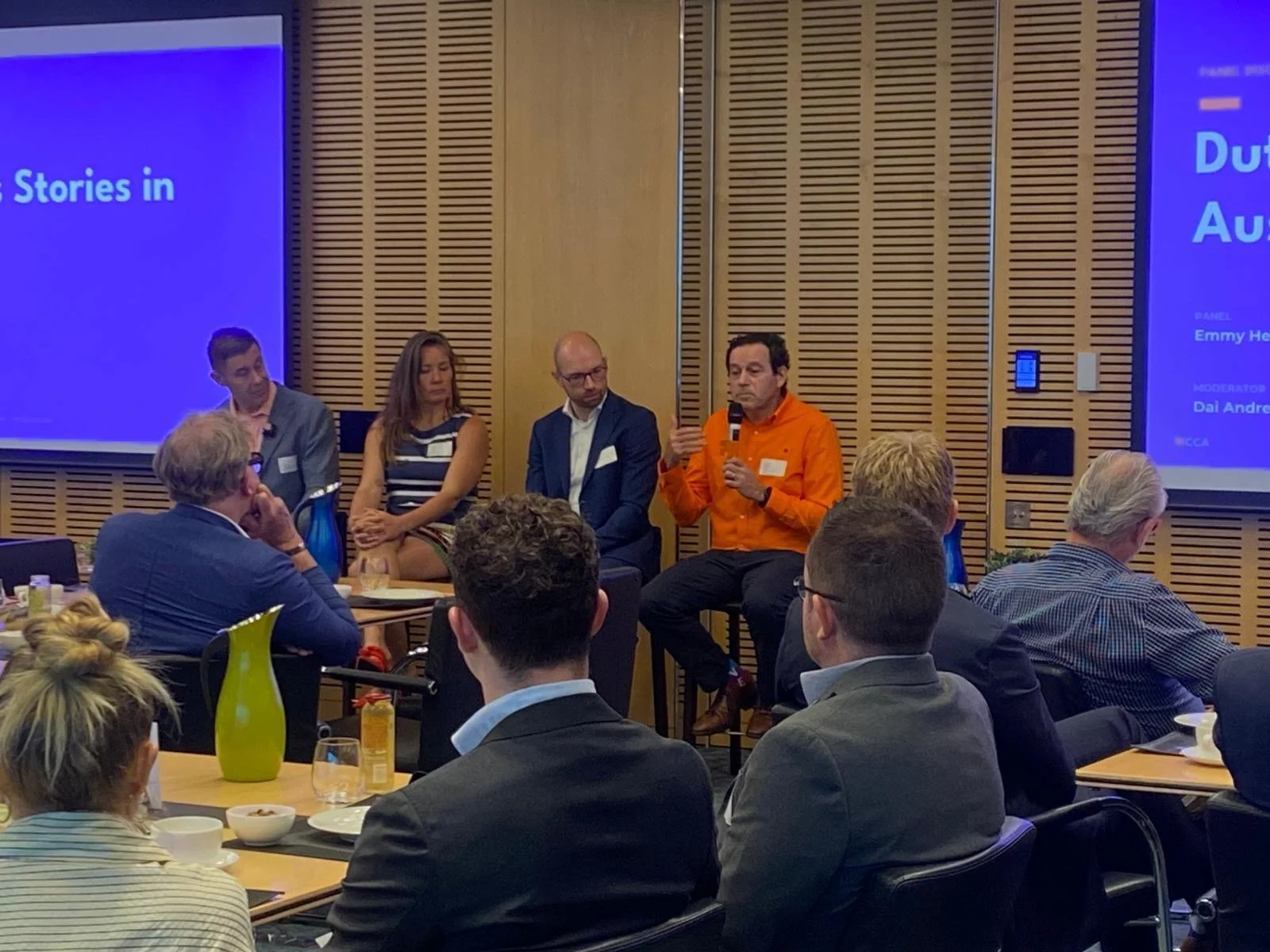
Emmy Heikamp arrived in Australia sixteen years ago with baby twins and a problem. The cargo bikes she had relied on in the Netherlands did not exist here. After a Dutch supplier offered her exclusivity for whoever imported the first container, she ordered one, ran the business out of a garage, and spent the next decade and a half building Dutch Cargo Bike into a national operation selling across Australia and New Zealand. The market she has shaped, particularly among families and the disability sector, did not really exist when she started.
Tim Ferraro's story for Land Life, the global nature restoration company he leads in the Asia-Pacific, was just as informal at the point of entry. The company arrived in Australia, he said, because a Dutchman who had heard about its Series A funding sent a single email saying that if Land Life wanted to scale, it needed to be here. One email led to a pilot project, which led to a country presence. Land Life now operates across Europe, Asia, the Americas and Australia, buying degraded farmland and restoring it with up to 50 species per site, on the principle that the system can be helped to function differently rather than restored to a 200-year-old baseline.
Paul Kanters represents the other end of the spectrum entirely. Vopak is 410 years old and operates two bulk liquid import terminals in Australia. Its current Australian project, the Victoria Energy Terminal, is a floating storage and regasification unit proposed for Port Phillip Bay, and it is the largest pre-FID investment the company has made in its history. Kanters explained the rationale plainly. Bass Strait gas is depleting, most forecasts expect it to be uneconomic by the end of this decade, and around 60 to 65 per cent of Victorian electricity still comes from brown coal. The terminal is designed as a temporary solution, sailing elsewhere once the system is decarbonised and electrified.
Three businesses, three orders of magnitude, three completely different routes in. What they share is more interesting than what divides them.
All three speakers returned repeatedly to the same observation about how decisions get made on each side of the relationship. Kanters drew the sharpest version. In Texas, he said, decisions get made fast, sometimes in the wrong direction, but they get made. In the Netherlands, decisions are planned. In Australia, decisions are often deferred because the worst outcome is causing offence, with the result that no decision becomes the default. Ferraro framed it from the inside of an Australian-led global team. Australian culture, he said, is "about getting shit done," but sometimes moves ahead of the consensus that Dutch organisations need to operate. Heikamp's version was the most practical. When Dutch Cargo Bike entered the market, "stop driving your car" was a non-starter. "Replace your second car, two or three days a week" was a conversation. Framing did the work.
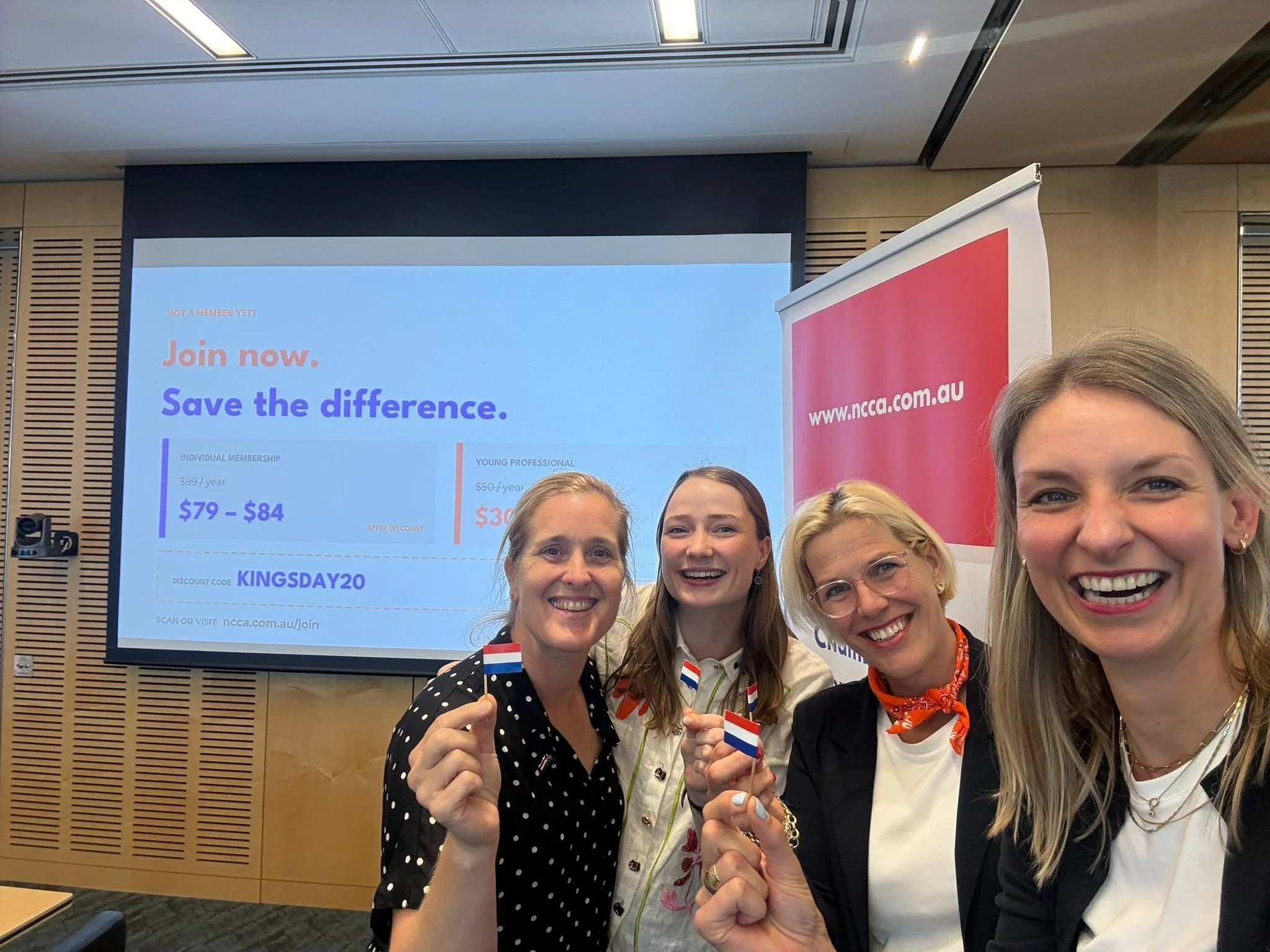
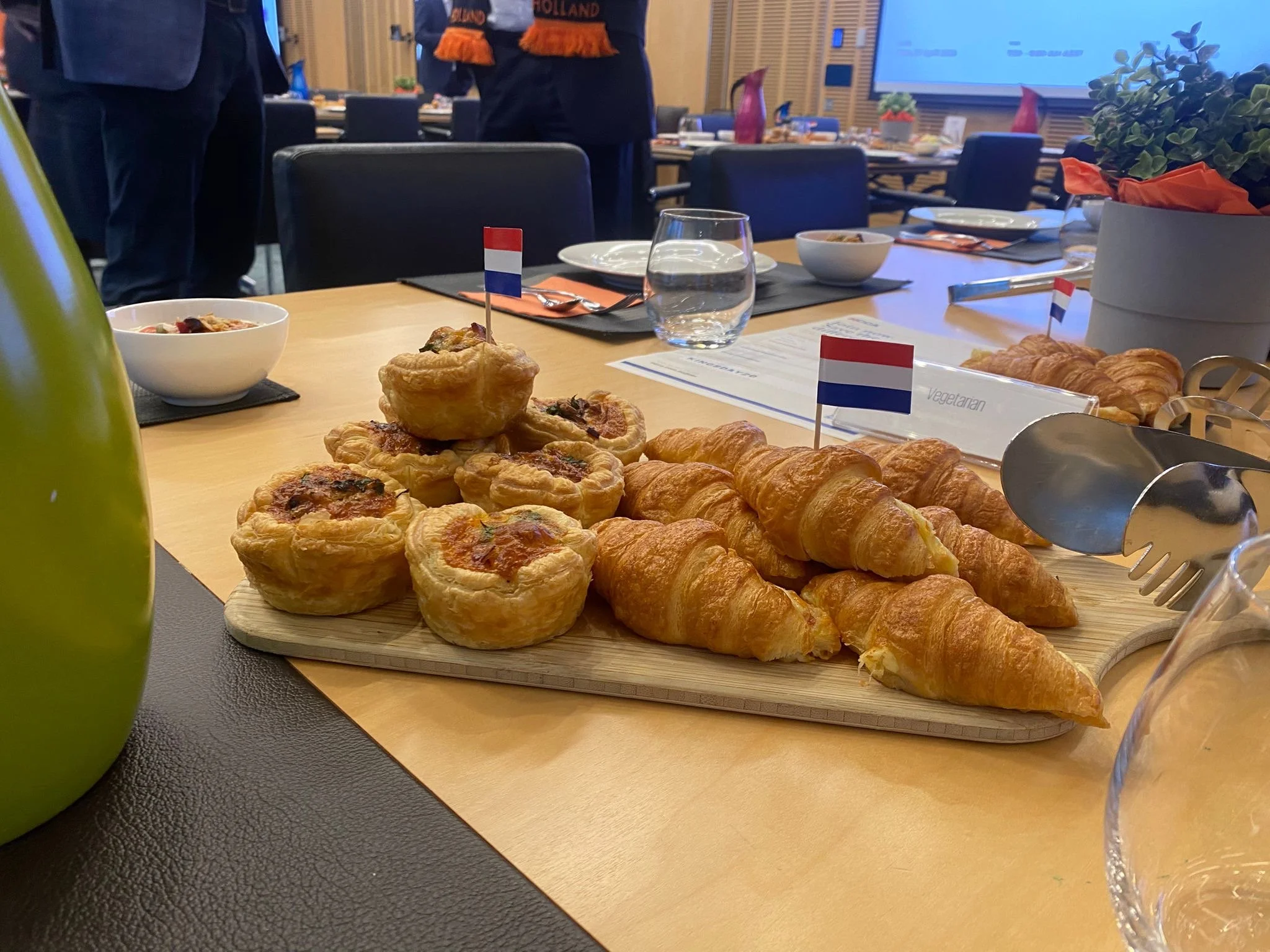
The other shared thread was a careful optimism about what comes next. Ferraro pointed to the Australia-EU Free Trade Agreement as a genuine landmark, the first Australian FTA to carry binding environmental and human rights commitments, and one that meaningfully changes the runway for international capital flowing into Australian nature restoration. Kanters saw the agreement as a clean win-win. None of the panel suggested it was a panacea, but the broader direction was treated as settled.
NCCA President Eelco Lijding closed the morning by reflecting that all three speakers had, in their own way, brought a piece of Dutch tradition with them. The cargo bike, the consensus, the centuries-old corporate identity. He suggested that the King's Day Business Breakfast itself might become another tradition. On the evidence of the conversation it produced, that is one worth keeping.
The NCCA thanks KPMG for hosting, Tim Ferraro, Emmy Heikamp and Paul Kanters for sharing their experience so candidly, and Dai Forterre for moderating.
